

What Is Channel Data Management?
Channel data management transforms distributor, partner, and program data into trusted insights that improve channel visibility, partner performance, and revenue decisions
As indirect sales channels become more complex, companies need a reliable way to collect, manage, and trust the data that drives their channel programs. When technology companies sell through distributors, resellers, and other channel partners, every business decision depends on the quality of the data behind it. Yet many high tech companies still struggle with fragmented systems, inconsistent reporting, and limited visibility into partner activity.
Channel data management provides that foundation.
Channel data management defined
Channel data management (CDM) is the practice of collecting, organizing, and maintaining the information that powers a technology company’s indirect channel. Traditionally, the term referred primarily to distributor sales data. Today, the term encompasses a much broader set of information that helps technology companies understand, manage, and grow indirect sales channels.
Modern channel data management brings together data from a vast group of processes, including partner profiles, deal registration, revenue transactions, engagement, training completion, incentive payments, point-of-sale transactions (POS), inventory, and claims information. Collectively, these data sources provide the visibility needed to understand partner performance and identify opportunities so teams can make informed business decisions.
With trusted channel data, high tech companies can determine partner eligibility for programs and incentives, segment partners by capability, monitor inventory and sell-through activity, measure program performance, and identify which relationships generate the greatest business value. Every one of these decisions depends on data that is complete, accurate, and current.
For technology companies that generate a significant percentage of revenue through indirect channels, channel data management is more than an operational function. It is the foundation for improving channel visibility, strengthening partner relationships, and making confident, evidence-based decisions.
Why does channel data management matter?
Having access to channel data is only part of the equation. The real value and why it matters comes from turning that information into trusted insights that improve business performance.
Every channel dashboard, partner scorecard, and key performance indicator is only as reliable as the data behind it. When data is incomplete, inconsistent, or outdated, reporting becomes less trustworthy and business decisions rely more on assumptions than evidence.
High-quality channel data enables high tech companies to evaluate partner performance, improve forecasting, optimize incentive programs, monitor inventory, and allocate resources where they will have the greatest impact. It also provides greater confidence when measuring channel ROI and identifying growth opportunities across the partner ecosystem.
Simply put, channel data management matters because better data leads to better decisions.
Why is channel data so difficult to manage?
Managing channel data becomes increasingly complex as partner ecosystems expand. Data originates from distributors, resellers, and other partners that often use different systems, reporting formats, and business processes. Bringing that information together into a consistent, reliable view is challenging.
Limited visibility into point-of-sale activity, inventory levels, sell-through performance, and claims data can also make it difficult to detect channel stuffing, gray market activity, account conflicts, or inaccurate incentive payments before they affect revenue and partner relationships.
Without channel automation and a disciplined approach to channel data management, technology companies spend more time validating information than acting on it.
How can channel data management software improve business decisions?
Channel data management software improves business decisions by automatically collecting, validating, standardizing, and connecting partner data into a trusted source of channel intelligence. This gives technology companies greater visibility to improve forecasting, monitor partner performance, optimize programs, and make more confident revenue decisions.
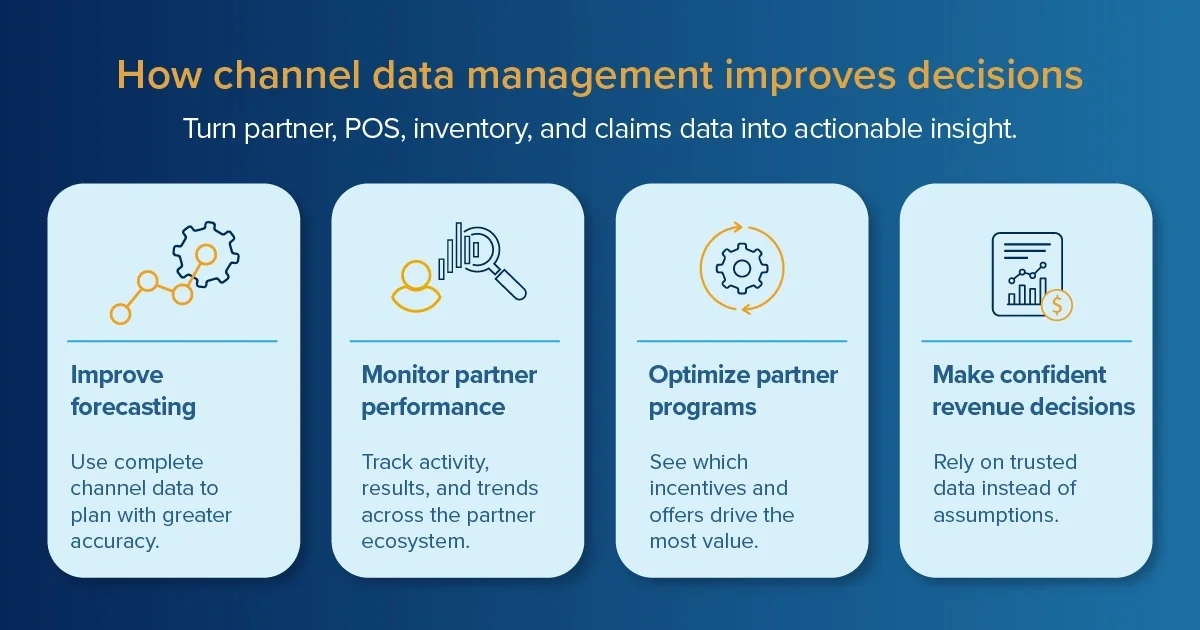
Rather than spending time reconciling inconsistent partner reports, Vistex channel solutions and Business AI Link: Business AI | Vistex automate the management of point-of-sale (POS), inventory, claims, incentive, and partner data across the channel ecosystem. This reduces manual effort while ensuring the data behind every report, dashboard, and business decision is complete, consistent, and reliable.
The result is a trusted foundation for evaluating partner performance, identifying growth opportunities, improving operational efficiency, and maximizing channel revenue.
Learn from industry leaders: What does effective channel data management look like in practice?
Hear directly from Vistex customer channel leaders at Adobe, ScanSource, Intel, and NEC Display as they sit down with Vistex experts to discuss the role of channel data management, the challenges of managing complex partner ecosystems, and the strategies they use to improve visibility, decision-making, and channel performance.
Explore more related resources


You Need To Walk Before You Can Run - Crawl, Walk, Run: Solving ECM Pricing and incentive challenges step-by-step
Get the latest news, updates, and exclusive insights from Vistex delivered straight to your inbox. Don’t miss out—opt in now and be the first to know!