
How European pharma companies can protect margin through Gross-to-Net visibility
Why is pharma margin harder to protect in Europe?
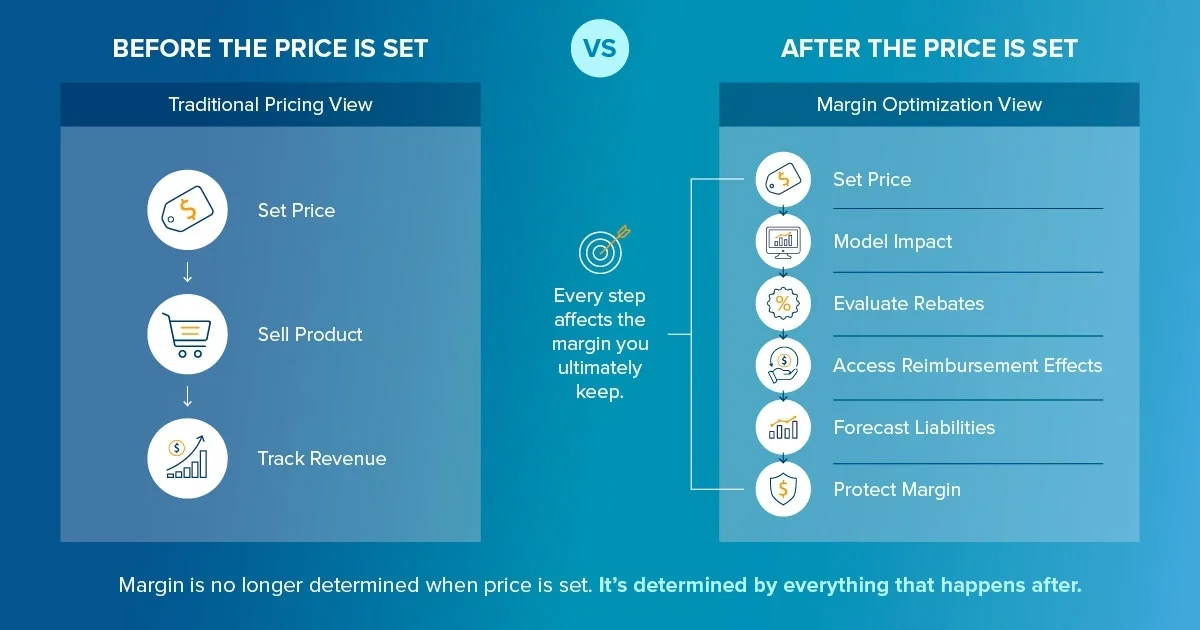
Pharma margin optimization in Europe has become less about setting the list price and more about controlling everything that happens after the price is set.
Gross-to-Net is now one of the biggest determinants of profitability across European pharma markets. Confidential discounts, statutory rebates, tender agreements, reimbursement structures, and country-specific pricing controls all influence the revenue manufacturers ultimately retain. In this environment, strong sales performance does not guarantee strong margins.
This dissonance is the operational challenge many pharma companies are struggling to solve. A product may appear commercially successful while margins quietly erode due to unmanaged deductions, inconsistent forecasting, and limited visibility into true net revenue performance.
The pharma companies protecting their margins most effectively are not simply negotiating better pricing agreements. They are improving Gross-to-Net visibility to understand the downstream financial impact of commercial decisions before margin erosion occurs.
Gross-to-Net visibility is especially challenging in Europe because pharmaceutical pricing, reimbursement, and market access rules vary by country. A WHO (World Health Organization) report on medicines reimbursement policies in Europe shows how these national differences create complexity for manufacturers and reinforce the need for clearer visibility into realized revenue. As rebates, discounts, chargebacks, and other pricing concessions add up, the gap between list price and net revenue continues to widen.
How Gross-to-Net directly impacts net revenue in pharma
Every rebate, discount, chargeback, and pricing concession your company grants doesn't just reduce a line item. It erodes the revenue you keep. Gross-to-Net is what stands between your invoiced revenue and what you retain, and in pharma, it's rarely a small distance.
GtN is often misunderstood as a finance reporting exercise when it is fundamentally a margin management discipline. Each commercial agreement influences profitability, forecast accuracy, and long-term portfolio performance. When those variables are poorly governed, margin erosion occurs gradually and often without immediate visibility.
That is why leading life sciences organizations are repositioning Gross-to-Net as part of a broader margin optimization strategy. The focus is shifting from simply tracking product sales: “What did we sell?” to understanding true realized revenue and the financial impact of every pricing and access decision: “What did we really earn?” and “What commercial decisions are most likely to improve profitability without compromising access or growth?”
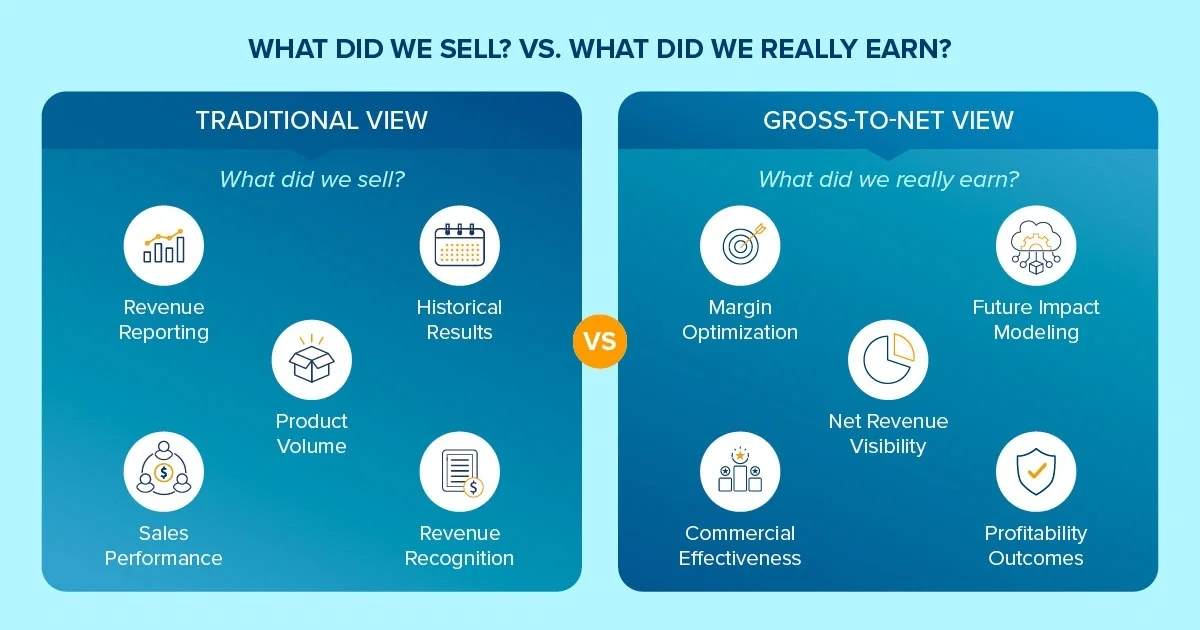
This shift is especially important in European pharma markets where reimbursement structures and pricing controls can vary significantly by country. Margin optimization is not about removing concessions altogether. In many cases, rebates and access agreements are necessary to compete effectively and maintain patient access. The objective is to understand which agreements create sustainable value and which reduce profitability without delivering meaningful commercial return.
Organizations that improve Gross-to-Net visibility are better positioned to evaluate pricing strategies before execution, forecast liabilities more accurately, and protect margin without compromising commercial growth.
How Gross-to-Net blind spots create hidden margin erosion
Gross-to-Net blind spots create hidden margin erosion by limiting visibility into how your rebates, discounts, and commercial agreements affect true profitability across markets.
Many pharma companies are still managing Gross-to-Net using legacy operational models built for reporting complexity rather than margin control. Financial assumptions become fragmented, forecasting accuracy weakens, and commercial teams operate without a reliable understanding of the downstream impact on margins.
These visibility gaps create operational and strategic problems across your company's commercial teams. Finance teams struggle to reconcile expected versus actual performance. Market access teams may negotiate agreements without complete insight into long-term profitability implications. Leadership teams lack confidence in the data needed to make pricing and portfolio decisions quickly.
Over time, those blind spots make it harder to optimize commercial investments and allocate resources effectively. Margin leakage becomes difficult to identify because deductions, reimbursements, and settlement liabilities are often managed independently rather than within a connected commercial framework.
In today’s low-growth, high-pressure life sciences environment, pharma companies like yours need stronger alignment between commercial strategy and financial control. Gross-to-Net visibility enables that alignment by connecting pricing decisions, rebate obligations, and profitability outcomes into a more transparent operational model.
What European pharma companies are doing to improve Gross-to-Net control
Pharma companies are improving Gross-to-Net control by connecting pricing, rebates, reimbursements, forecasting, and settlement processes within a more integrated revenue management framework.
Rather than treating these activities as isolated operational functions, leading pharma companies are creating governed commercial models that provide clearer visibility into net price, liability exposure, and margin performance across markets.
Most pharma companies are prioritizing three key capabilities.
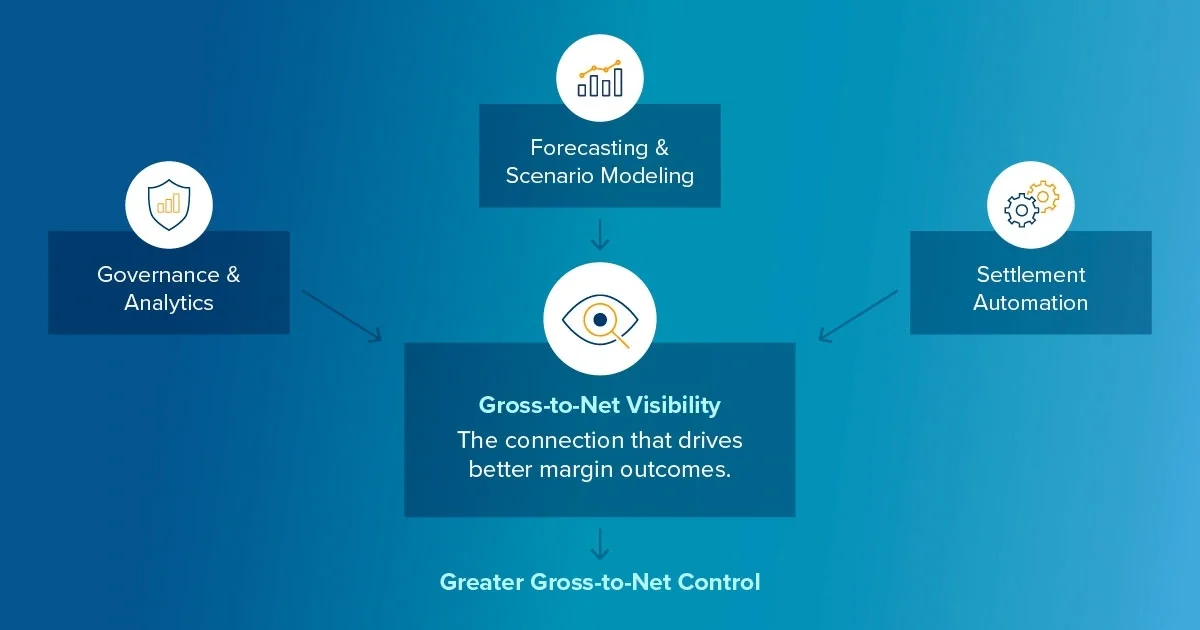
- Improving forecasting and scenario modeling so teams can evaluate the downstream financial impact of pricing and access decisions before agreements are finalized.
- Automating pricing, rebate, chargeback, royalties, and reimbursement settlement processes to improve accuracy, scalability, and compliance across increasingly complex commercial environments.
- Strengthening governance and analytics so finance, commercial, and market access teams can operate from a shared view of commercial performance and profitability.
This is where revenue management platforms like Vistex enterprise software support operational improvement. By connecting pricing, rebates, chargebacks, royalties, reimbursements, and Gross-to-Net analytics within a governed framework, pharma companies gain greater visibility into margin performance and stronger control over commercial execution.
Margin optimization becomes measurable when you can model financial impact before execution, continuously monitor liabilities, and make commercial decisions using connected operational data rather than disconnected assumptions.
Why Gross-to-Net visibility is becoming operationally critical
Pharma companies can no longer manage pricing complexity, reimbursement pressure, and margin performance through disconnected financial processes. That gap is what's making Gross-to-Net visibility operationally critical.
In European pharma markets, profitability is increasingly shaped by how effectively organizations govern rebates, reimbursements, tenders, chargebacks, and pricing agreements across countries and commercial channels. The challenge is no longer simply setting a competitive list price. The challenge is understanding what the business ultimately retains after all concessions, adjustments, and settlement obligations are applied.
As a result, Gross-to-Net has evolved from a retrospective finance process into an operational decision framework that influences pricing strategy, forecasting accuracy, market access planning, and profitability management in real time.
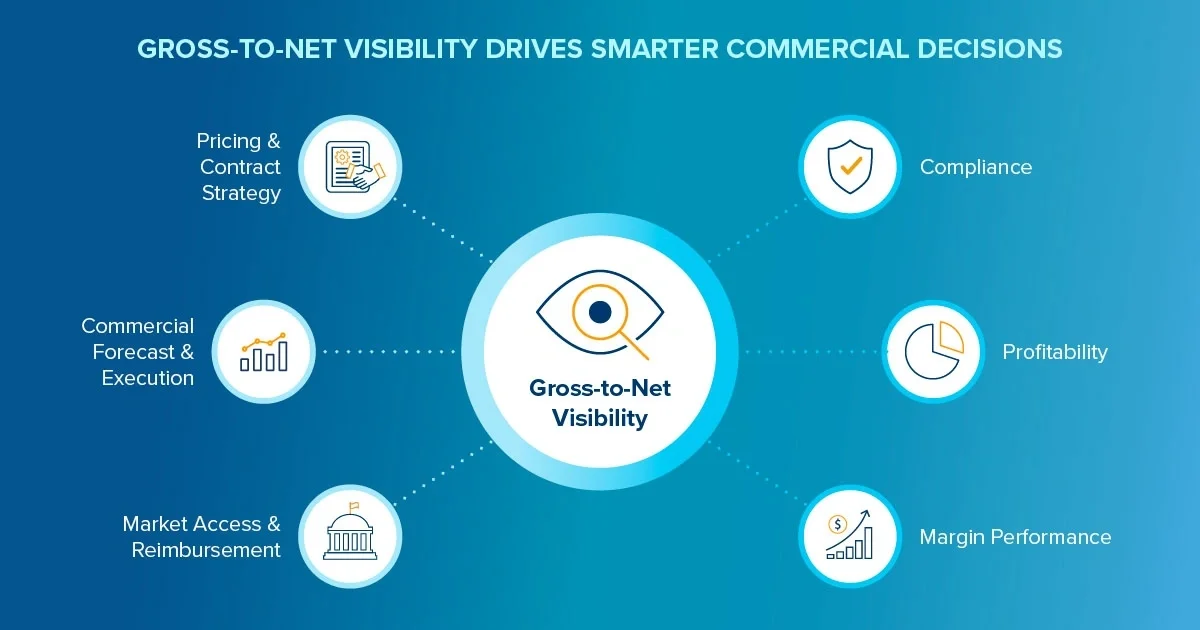
The pharma companies performing best in today’s environment are the ones operationalizing visibility before commercial decisions are executed. They are improving collaboration across pricing, finance, market access, and compliance functions while building stronger control over margin performance at scale.
This is where Vistex AI-driven enterprise revenue management software becomes strategically important.
Instead of managing pricing, rebates, reimbursements, and margin analytics across disconnected systems, Vistex enables life sciences organizations to operate within a governed commercial framework with greater visibility and control.
Margin optimization becomes measurable when pharma companies can model financial impact before execution, continuously monitor liabilities, and make commercial decisions using connected operational data rather than disconnected assumptions
Gross-to-Net is now a competitive advantage for European pharma companies
Pharma margin optimization in Europe is no longer determined solely by pricing strategy.
It is increasingly determined by how effectively companies govern rebates, reimbursements, tenders, chargebacks, and pricing agreements after commercial decisions are made.
The organizations gaining an advantage are those that can anticipate the financial consequences of those decisions before they affect profitability.
This is where Vistex enterprise software becomes strategically important.
Instead of managing pricing, rebates, reimbursements, and margin analytics as separate operational activities, Vistex enables life sciences companies to operate within a governed commercial framework with greater visibility and control.
With Vistex software, your pharma company can:
- Improve visibility into true net revenue and margin performance
- Model the downstream impact of pricing and access decisions before execution
- Automate complex rebate, chargeback, and reimbursement processes at scale
- Strengthen forecast accuracy with connected commercial and financial data
- Align pricing, finance, market access, and compliance teams around a shared operational view
Here's the shift: Gross-to-Net is no longer a financial reconciliation exercise. It becomes a commercial decision framework for protecting margin.
Leading pharma companies are no longer asking whether they have visibility into rebates, reimbursements, and deductions after they occur.
They are building the ability to understand their financial impact before commercial decisions are executed.
Because in today's European pharma environment, margin erosion rarely comes from a single event.
It accumulates across hundreds of pricing, contracting, reimbursement, and access decisions that appear manageable in isolation but become difficult to control at scale.
Gross-to-Net visibility enables pharma companies to connect those decisions, understand their impact, and protect profitability before value is lost.
And that is the advantage Vistex is built to deliver.
Explore more related resources

Get the latest news, updates, and exclusive insights from Vistex delivered straight to your inbox. Don’t miss out—opt in now and be the first to know!