
What will drive 2026 holiday shopping trends?
Holiday shoppers will enter the 2026 season facing a mix of higher prices, aggressive promotions, rising delivery costs, and new ways to compare products and prices. While overall spending is forecast to increase, how and why consumers spend may matter more to retailers than the headline growth number.
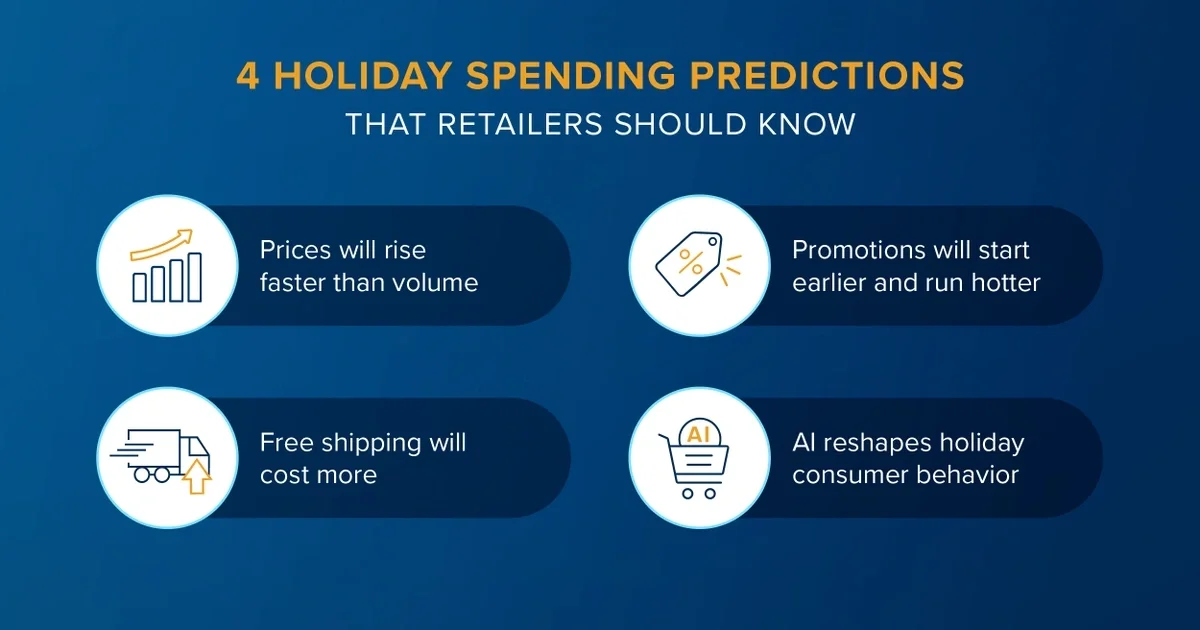
Four trends could shape the season:
- Inflation-driven sales growth
- An earlier and more competitive promotional calendar
- Continued expectations for free shipping
- The growing role of AI in product discovery and price comparison.
For retailers, each creates opportunities, but also potential costs that need to be accounted for before, during, and after the promotion.
What will shape consumer behavior during the holiday season in 2026?
When I worked in grocery at Walmart, the holiday season didn't start in November. It started months earlier, in meetings with suppliers about which products we'd promote, at what price, and how much of each discount they would fund. By the time a shopper saw a deal on the shelf, most of the hard work was done.
Most of it. Every year, something changed once the season was underway. A competitor moved first, a product didn't sell, a cost went up. And each time, the same question came back to the table: Who pays for this?
It's the question I'd ask about consumer behavior during the 2026 holiday season too.
Forecasters are in a generous mood this year. Bain & Company states US sales in November and December will pass $1 trillion for the first time, up 4.5%. Deloitte, counting through January, forecasts seasonal spending at around $1.71 trillion. Mastercard goes higher still, at 5.5%. Look behind those numbers, though, and each trend comes with a bill attached.
Here are four predictions for holiday 2026, and who is likely to end up paying.
Holiday Prediction #1: Prices will rise faster than volume
The prediction: One of the biggest factors shaping consumer behavior during the 2026 holiday season may be price itself. Sales will grow, but not because people are buying much more. Bain states more than half of this season's growth will come from inflation. eMarketer points to tariffs, higher gas prices, and cautious shoppers. In the UK, GlobalData expects 3.2% growth in 2026, with inflation masking weak volumes.
Who pays? Many price increases start with the supplier. The retailer can absorb them, pass them on at the shelf, or push back and ask for something in return, such as extra promotional funding or a better rebate.
In grocery, this negotiation never really stops. The difference is deciding the shelf price and the supplier deal together. Treat them separately, and it's easy to accept a cost increase in October and then fund a discount on the same product in December, paying twice.
Holiday Prediction #2: Promotions will start earlier and run hotter
The prediction: Thanksgiving falls on November 26th this year, about as late as it can be, leaving four weeks between Black Friday and Christmas. This means retailers will start promotions earlier, and Cyber Monday on November 30th will push a large share of online spending into one long weekend.
The dates have been known for a year, and retailers plan their main promotions around them. But a short, crowded season leaves little room for error. If a competitor goes earlier or deeper, or a product sells more slowly than planned, promotions get extended, deepened or brought forward at short notice.
Holiday Prediction #3: Free shipping will cost more
The prediction: Shoppers still expect free delivery, and it's getting more expensive to provide. Salesforce forecasts that retailers worldwide will spend an extra $3 billion this season subsidizing it, as geopolitical tensions push up logistics costs. Meanwhile, Deloitte expects US holiday e-commerce to grow 7.5% to 8.4%.
Who pays for delivery? For consumers, free shipping remains an expectation. For retailers, of course, it has never actually been free. Most retailers simply absorb it, but they don't have to. Some suppliers already contribute through logistics allowances, especially for bulky items, and others could be asked to do the same. Price is the other lever: a bag of dog food and a lipstick cost very different amounts to deliver, and an item that costs more to ship than it earns may need a different online price, a minimum basket, or a supplier contribution.
Holiday Prediction #4: AI will affect consumer behavior during the holiday season
The prediction: AI agents will make every price comparable. This is a genuinely new one. Bain's survey found that 24% of online shoppers expect to start their holiday search on an AI platform, up from 17% last year. Salesforce predicts a fifth of holiday e-commerce traffic will come from AI agents, including competitors' bots that scrape prices to feed automatic price matching.
As a marketplace seller manager, I saw how fast prices move when software sets them. Repricing tools check competitors constantly and adjust on their own. Now, consumers have a bot too. An AI assistant compares every retailer at once and points to the cheapest item, so a discount that once gave you an edge for days can be copied within hours.
Who pays for the match? When a competitor's price pressures you to drop your price mid-promotion, someone absorbs the difference. With price protection or flexible funding in the supplier agreement, the cost is shared. Without it, it comes straight out of margin.
Bain recommends selling what can't be matched line for line: owned brands, exclusive products, unique bundles. Those usually mean deeper supplier deals, with shared funding, guaranteed volumes, or tailored rebates.
Effective management of price and supplier funding will impact retailers this holiday season
Put the four predictions together, and they point the same way: price and supplier funding can no longer be managed separately. That was true when grocery promotions were planned months ahead, and it was true in a marketplace where prices moved by the hour. In both roles, the people who did well weren't the ones with the lowest prices. They were the ones who knew exactly what each deal was worth. This season, that's simply harder to ignore.
How Vistex helps retailers connect pricing and supplier funding
Holiday retail moves quickly. Pricing, promotions, supplier agreements, rebates, and other funding mechanisms need to move together. Vistex margin optimization software gives retailers greater visibility into these interconnected decisions so that they can understand the true economics of promotions, account for supplier funding, and better protect margins as market conditions change.
Frequently Asked Questions (FAQs)
Q: What will influence consumer behavior during the holiday season 2026?
A: Higher prices, earlier promotions, continued expectations for free shipping, and increased use of AI shopping tools are among the trends expected to influence holiday shopping behavior in 2026.
Q: How could inflation affect 2026 holiday retail sales?
A: Sales are forecast to grow, but some of that increase may reflect higher prices rather than significantly greater purchasing volumes.
Q: How is AI changing holiday shopping?
A: AI shopping assistants can help consumers discover products, compare retailers, and evaluate prices more quickly, increasing price transparency and potentially accelerating competitive price changes.
Q: Why is supplier funding important during the holiday season?
A: Retail promotions often depend on negotiated supplier funding. When promotions change after agreements have been established, retailers need visibility into who will absorb additional discounts and costs.
Explore more related resources
How can revenue management help retail companies manage costs, protect margins, and improve profitability?
Get the latest news, updates, and exclusive insights from Vistex delivered straight to your inbox. Don’t miss out—opt in now and be the first to know!