

What are the different types of retail pricing strategies?
There is no one-size-fits-all approach to retail pricing. The most successful retailers use a combination of pricing strategies based on their products, target audience, competitive landscape, and business goals. Understanding the different types of retail pricing strategies is the first step toward building a pricing model that protects margins while delivering value to customers.
Some of the most common pricing strategies for retailers include:
- Cost-Plus Pricing: Adds a predetermined markup to the cost of a product. While simple to implement, this method doesn't account for customer demand, competitor pricing, or perceived value, making it less effective in today's dynamic retail environment.
- Competitive Pricing: Uses market pricing as a benchmark, helping retailers remain competitive in categories where customers frequently compare prices. However, relying solely on competitor pricing can erode margins if not balanced with profitability goals.
- Value-Based Pricing: Rather than focusing on cost, value-based pricing considers what customers are willing to pay based on the perceived value of a product. This strategy is particularly effective for differentiated products or premium brands.
- Dynamic Pricing: Allows retailers to adjust prices based on changing market conditions, inventory levels, customer demand, seasonality, or competitor activity. AI and automation make dynamic pricing more accurate and scalable than ever before.
- Promotional and Discount Pricing: Temporary promotions, clearance promotions, loyalty rewards, and targeted discounts can increase traffic and drive conversions. The key is ensuring promotions support long-term profitability instead of training customers to wait for the next sale.
- Psychological Pricing: Pricing tactics such as ending prices in ".99," creating product bundles, or anchoring premium products next to standard offerings can positively influence customer purchasing decisions.
No single pricing strategy works for every retailer or every product. Today's leading retailers combine multiple pricing strategies and continuously optimize them using real-time data, customer insights, and AI-powered technology.
Retail pricing best practice #1: Adapt pricing to market conditions
Retail pricing has become significantly more complex over the past several years. Inflation, supply chain disruptions, changing consumer expectations, and increased price transparency have created an environment where static pricing models can quickly become outdated. Customers can compare prices across multiple retailers in seconds, making pricing agility more important than ever.
Rather than reviewing prices once or twice a year, many retailers now evaluate pricing on a weekly—or even daily—basis. A flexible pricing strategy enables organizations to respond to changing market conditions while protecting both customer trust and profitability.
Retail pricing best practice #2: Use data to drive smarter pricing decisions
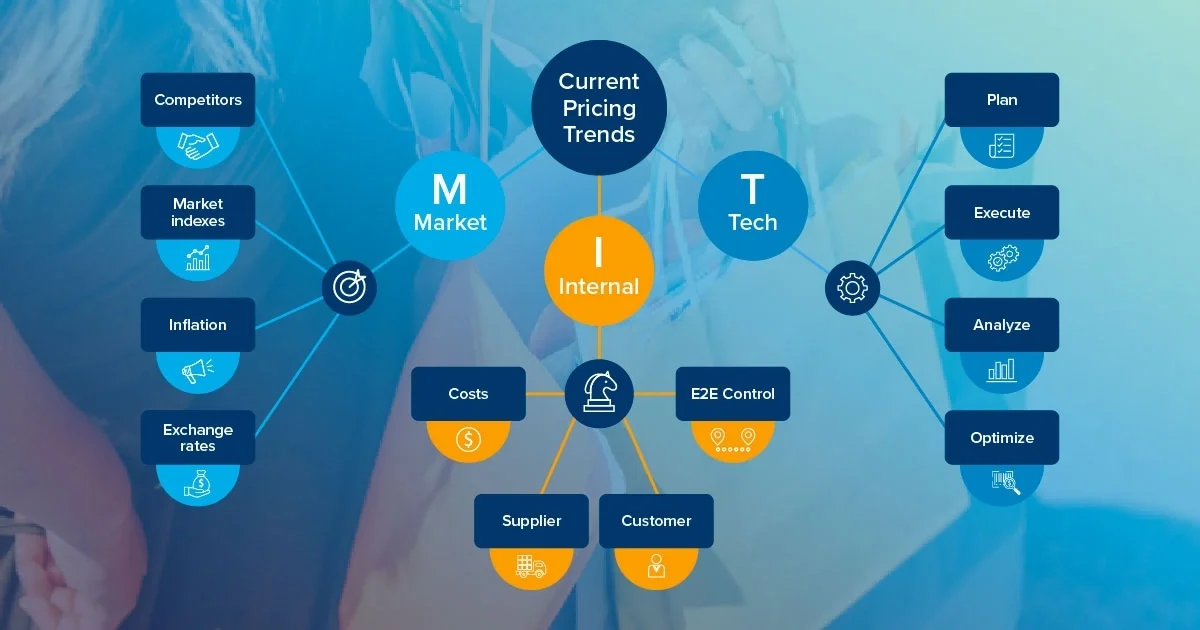
Successful pricing strategies rely on more than intuition—they require accurate, connected data. Every pricing decision should be informed by a complete understanding of supplier agreements, promotional performance, inventory levels, customer purchasing behavior, and profitability.
By bringing together internal and external revenue management data, retailers can identify which promotions generate incremental sales, determine where pricing adjustments are needed, and ensure every pricing decision aligns with broader business objectives. This data-driven approach also helps maintain consistent pricing across channels while supporting loyalty programs and personalized customer experiences.
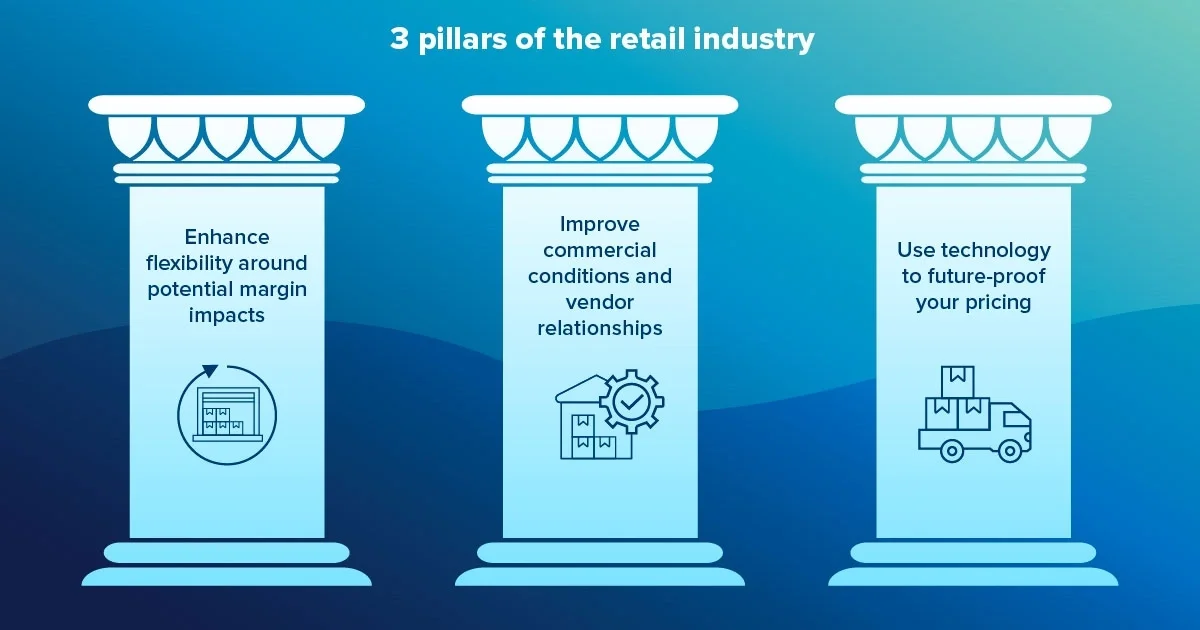
Commercial conditions and your relationship with vendors are key to optimizing prices. Negotiating good terms with suppliers and having complete control of any off-invoice claims you apply to them can lead to a considerable increase in the P&L. In addition, your suppliers’ contribution and funding could considerably improve a promotional campaign’s success rate while aligning your own goals with those of the supplier. This is accomplished with the ability to use, decipher and analyze your internal data to determine if a promotion is profitable or not.
From a customer perspective, ensure all price adjustments are in sync with your brand and fully support your loyalty programs. Customers who are loyal to your brand want to feel that they receive the best value for their money. You can achieve this with targeted promotions or differential pricing. With accurate internal information, you can implement rigid pricing boundaries and avoid extreme or speculative price variations that can drive loyal and new customers away.
Retail pricing best practice #3: Leverage AI and automation
As pricing decisions become more frequent and more complex, manual processes are no longer sufficient. Retailers must evaluate thousands—or even millions—of pricing scenarios across products, locations, customer segments, and sales channels. Artificial intelligence (AI) and automation enable retailers to analyze this information in real time and make pricing decisions based on data rather than guesswork.
A robust and flexible revenue management solution facilitates the implementation of distinct pricing strategies tailored to different product categories and even to each individual product. You’ll be able to make ad-hoc adjustments to a price or its conditions (costs, discounts, sales force incentives) that will immediately simulate the impact on key KPIs, such as profit or revenue. In addition, you can automate price changes for Electronic Shelf Labels (ESL) based on data and insights to truly enhance the omnichannel experience.
Artificial Intelligence (AI) has emerged as a valuable pricing strategy ally for retailers, allowing a wide range of possibilities to be analyzed quickly. Machine Learning (ML) solves pricing problems with enhanced transactional data, optimization algorithms and statistical methods to predict or optimize the desired KPI.
Examples of information you must provide to the algorithms, which will automatically determine the price that meets your "rules" set to achieve your goals, include the ability to answer these questions:
- What are your next goals or KPIs?
- Will this increase your profits?
- What are your conditions for determining prices?
- Can you ensure that the profit per product doesn't fall below a certain amount?
- Can you keep any price differences compared to your closest competitors below X?
Using these answers to create an integrated pricing strategy will safeguard your market share, maximize revenue potential and set you up for success in an ever-changing industry.
How to build an effective retail pricing strategy
An effective retail pricing strategy is built on continuous improvement rather than one-time decisions. While every retailer's goals are different, successful pricing strategies typically follow the same framework:
- Define clear business objectives, such as increasing profit margins, growing market share, or improving customer retention.
- Understand your costs and profitability thresholds.
- Analyze customer behavior and purchasing patterns.
- Monitor competitor pricing and broader market trends.
- Implement pricing rules that support your brand and business goals.
- Test pricing changes before rolling them out broadly.
- Continuously measure results and refine your strategy based on performance.
By combining market intelligence, customer insights, and technology, retailers can make pricing decisions that improve both financial performance and customer satisfaction.
Managing retail pricing across thousands of products, multiple suppliers, and numerous sales channels requires more than spreadsheets and manual updates. Retailers need a centralized approach that connects pricing, promotions, supplier programs, and performance data to make faster, more informed decisions.
Vistex solutions help retailers simplify pricing complexity by bringing together commercial data, supplier funding, promotional planning, and AI-powered pricing capabilities in one integrated platform. With greater visibility into pricing performance and the ability to model different scenarios before implementing changes, retailers can confidently respond to market shifts, improve margins, and deliver greater value to customers.
Whether your goal is to optimize everyday pricing, improve promotional effectiveness, or automate pricing decisions across your organization, Vistex provides the tools and insights needed to build a smarter, more profitable pricing strategy.
Frequently Asked Questions (FAQs)
Q: What are retail pricing best practices?
A: Retail pricing best practices are the processes and strategies retailers use to set, manage, and optimize prices while balancing profitability, competitiveness, and customer value. Effective pricing involves continuously evaluating market conditions, customer demand, competitor activity, inventory levels, and business objectives. Today's retailers also rely on data, AI, and automation to make pricing decisions more accurate and responsive to changing market conditions.
Q: What are the different types of retail pricing strategies?
A: There are several pricing strategies retailers can use depending on their goals and target market. Common approaches include cost-plus pricing, competitive pricing, value-based pricing, dynamic pricing, promotional pricing, psychological pricing, bundle pricing, and everyday low pricing (EDLP). Many retailers use a combination of these strategies to maximize revenue while maintaining customer trust and profitability.
Q: Which pricing strategy is best for retailers?
A: There isn't a single pricing strategy that works for every retailer. The most effective pricing strategy depends on factors such as your product assortment, competitive landscape, customer expectations, and business objectives. Many successful retailers combine multiple pricing strategies and continually optimize pricing using real-time data and AI-powered insights to respond quickly to market changes.
Q: How often should retailers review their pricing?
A: Retail pricing should be reviewed regularly to account for changes in costs, competitor pricing, inventory levels, customer demand, and market conditions. While many retailers once reviewed prices annually, today's market often requires monthly, weekly, or even daily pricing adjustments. Modern pricing technology helps retailers make these updates efficiently while maintaining pricing consistency and profitability.
Q: How does AI improve retail pricing?
A: Artificial intelligence helps retailers analyze large amounts of pricing, customer, inventory, and competitive data much faster than manual processes. AI can identify pricing opportunities, simulate pricing scenarios, recommend optimal price points, and automate routine pricing decisions while maintaining business rules and profitability goals. This enables retailers to respond more quickly to changing market conditions and improve overall pricing performance.
Explore more related resources
Get the latest news, updates, and exclusive insights from Vistex delivered straight to your inbox. Don’t miss out—opt in now and be the first to know!