
How can automotive companies preserve profitable growth in 2026?
Automotive leaders are no longer managing one market transition. They are managing several transitions that interact together, and each one changes the economics of pricing, incentives, and channel execution. Overall, automotive demand is holding, but margin certainty is not.
The global light-vehicle market remains large, but the 2026 outlook is more cautious. JD Power and GlobalData forecast global sales of 89.7 million, down 2.8% YoY amid economic and trade-related uncertainty. At the same time, the powertrain mix is diverging sharply by region.
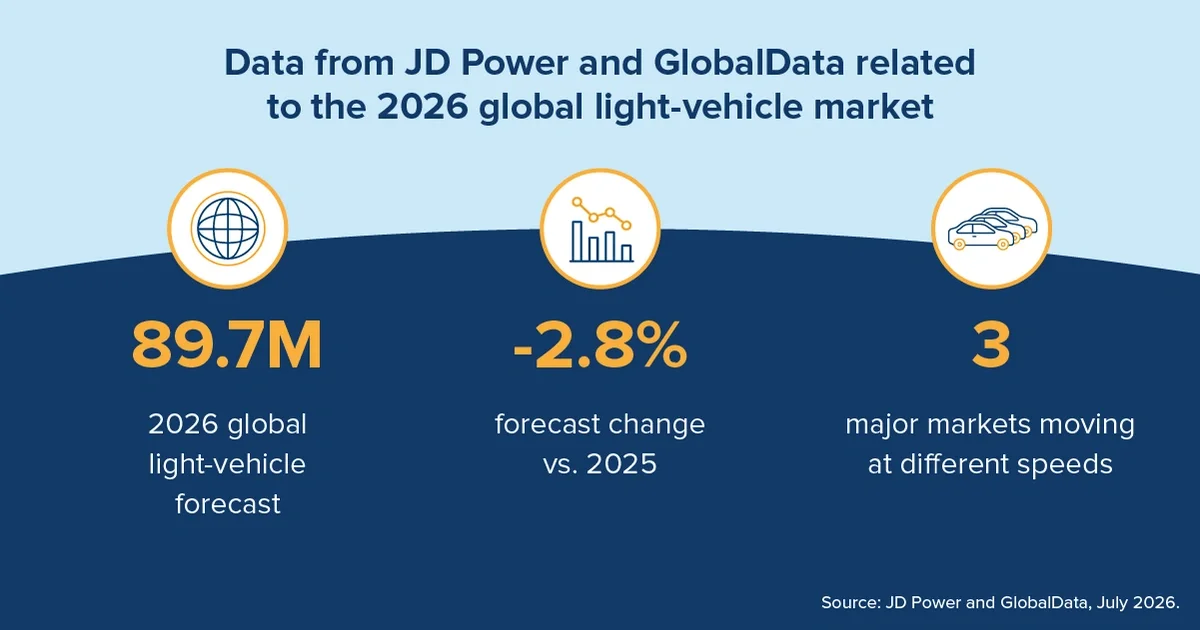
The management implication of this data is that broad, uniform commercial policies are becoming less effective. Automotive companies need to evaluate every price, incentive, rebate, dealer program, and digital offer in the context of powertrain, market, customer, channel, and total margin.
These implications vary by region:
- North America: Affordability and higher transaction complexity are increasing pressure to target incentives without creating unnecessary spend.
- Europe: Rapid electrification and regulatory pressure are increasing the need for localized pricing, channel governance, and product-mix decisions.
- China: Scale, speed, and cost competition are shortening decision cycles and reshaping the global cost and technology curve.
The common thread is revenue management. Pricing and incentive decisions can no longer operate effectively in isolation.
How affordability is changing automotive pricing and incentive strategies in North America
U.S. vehicle sales remained relatively strong in July 2026, reaching a seasonally adjusted annualized rate (SAAR) of 16.9 million vehicles. But the underlying economics show why volume alone is an incomplete measure of performance.
The average new-vehicle transaction price reached $45,369, while the average monthly payment climbed to $808. Manufacturers are leaning harder on discounts, with an average incentive spending expected to reach $3,451, or 6.7% of MSRP.
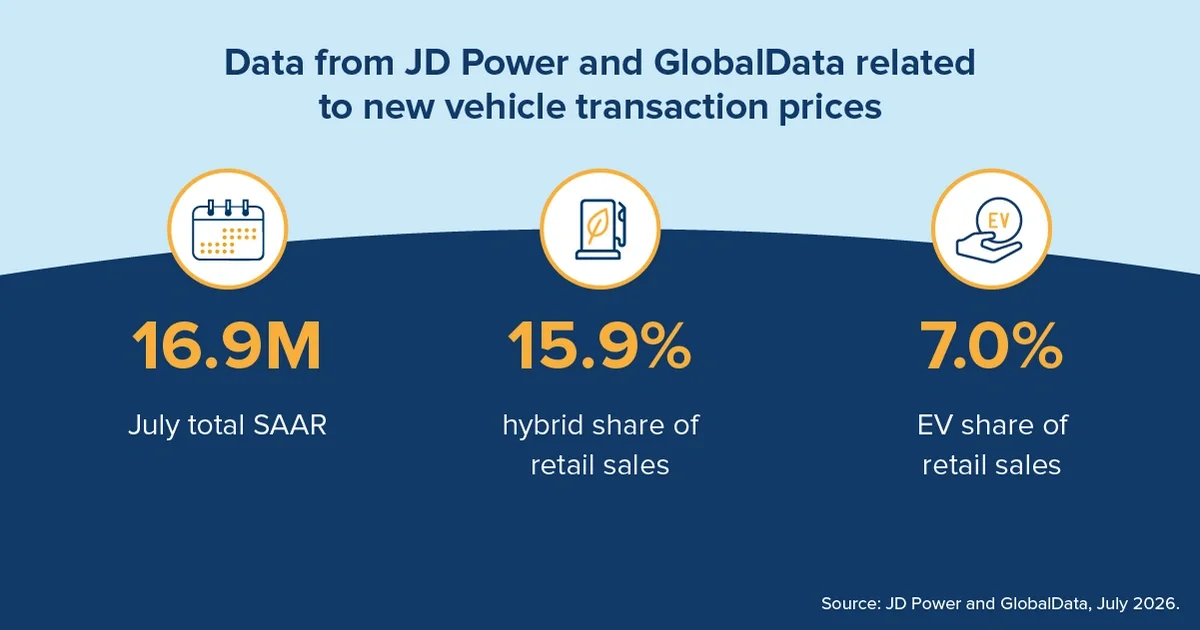
Powertrain differences add another layer of complexity. Hybrids accounted for 15.9% of retail sales, while EVs represented 7.0%. Average incentives on internal combustion engine (ICE) and hybrid vehicles reached $3,181 per unit, compared with $10,092 per unit for EVs.
For this year’s automotive margin outlook, those numbers raise an important question: Is additional incentive spending actually generating incremental demand and profitable growth?
Simply increasing incentives to generate volume can quickly become expensive, particularly if the company cannot link that spending to inventory conditions, customer demand, geography, and actual margin.
How to target automotive incentives more precisely
Rather than applying broad incentive support, automotive manufacturers can differentiate programs by model, inventory position, geography, and customer needs.
EV incentives require particular scrutiny. Companies need to understand incremental demand, residual-value effects, and total lifecycle economics before adding more spending.
As hybrid share grows, pricing, incentives, and vehicle allocation also need to be coordinated across the changing powertrain mix. When affordability remains constrained, automotive companies need to look beyond the MSRP and connect offers to factors such as monthly payment, trade-in equity, financing terms, and channel execution.
The opportunity is to move from incentive administration to closed-loop optimization: planning, executing, settling, analyzing, and adjusting programs while maintaining a traceable view of net margin.
Why European automotive pricing strategy requires greater localization
Europe presents a different pricing challenge than that in North America. Battery-electric share increased from 15.6% a year earlier, while hybrid-electric vehicles remained the preferred powertrain. Petrol and diesel together fell to 29.7% of registrations. The result is not one of European transition, but a portfolio of country, powertrain, and channel transitions.
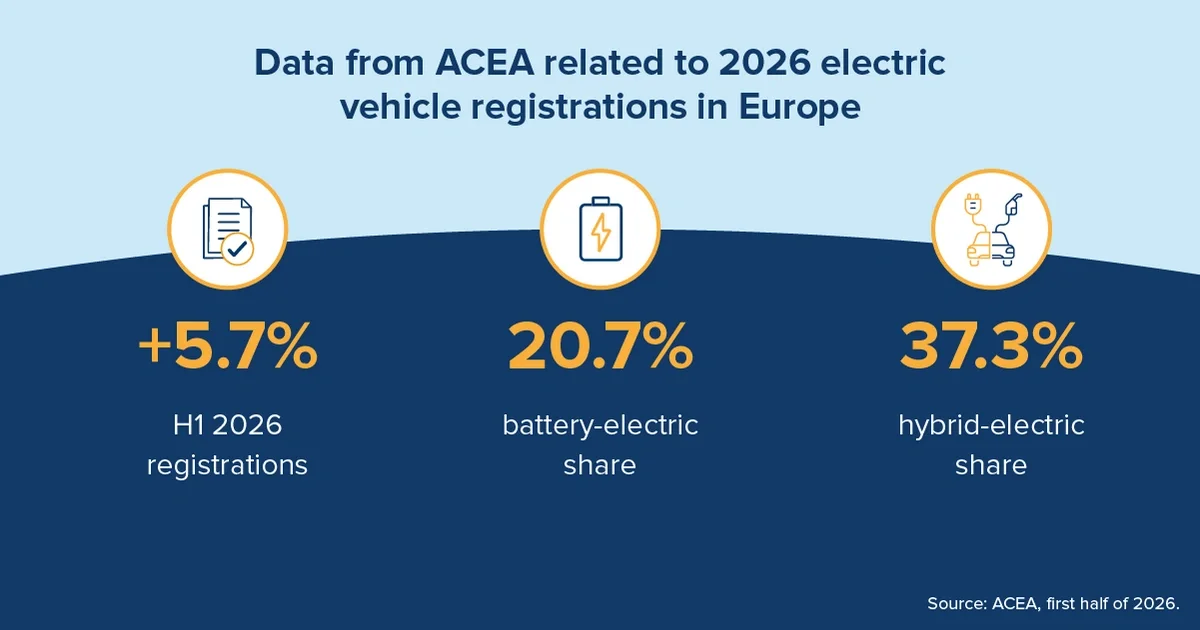
Since powertrain economics, regulations, incentives, and customer demand vary significantly across countries, a successful EU automotive pricing strategy needs enough flexibility to respond to local market conditions without sacrificing enterprise-wide control.
Effective commercial management requires attention to four areas:
- Localized pricing: Country-level taxes, incentives, competitive positions and regulations must be reflected without losing enterprise governance.
- Powertrain-specific programs: BEV, PHEV, hybrid, and ICE offers require different objectives, rules, and measurement.
- Dealer and importer transparency: OEMs need a consistent view of program eligibility, claims, accruals, and actual retail performance.
- Margin-aware decisions: Pricing, incentives, logistics, compliance, and channel costs must be evaluated together.
The revenue opportunity lies in establishing a governed global framework with local commercial flexibility, pairing common data and controls with differentiated market execution.
How China is reshaping competitive expectations
China’s influence on the automotive margin outlook extends far beyond its domestic automotive market. The IEA reports that China produced approximately 16 million electric cars in 2025, accounting for nearly three-quarters of global electric-car production. That scale is influencing cost, feature content, development speed, and export competition across every major market.
At the same time, JD Power and GlobalData revised the 2026 global outlook downward in July, citing weakness in China alongside broader economic and trade headwinds. The strategic lesson is not simply that China will continue to grow; it is that global automotive companies must respond more quickly to changing demand and competitive pricing.
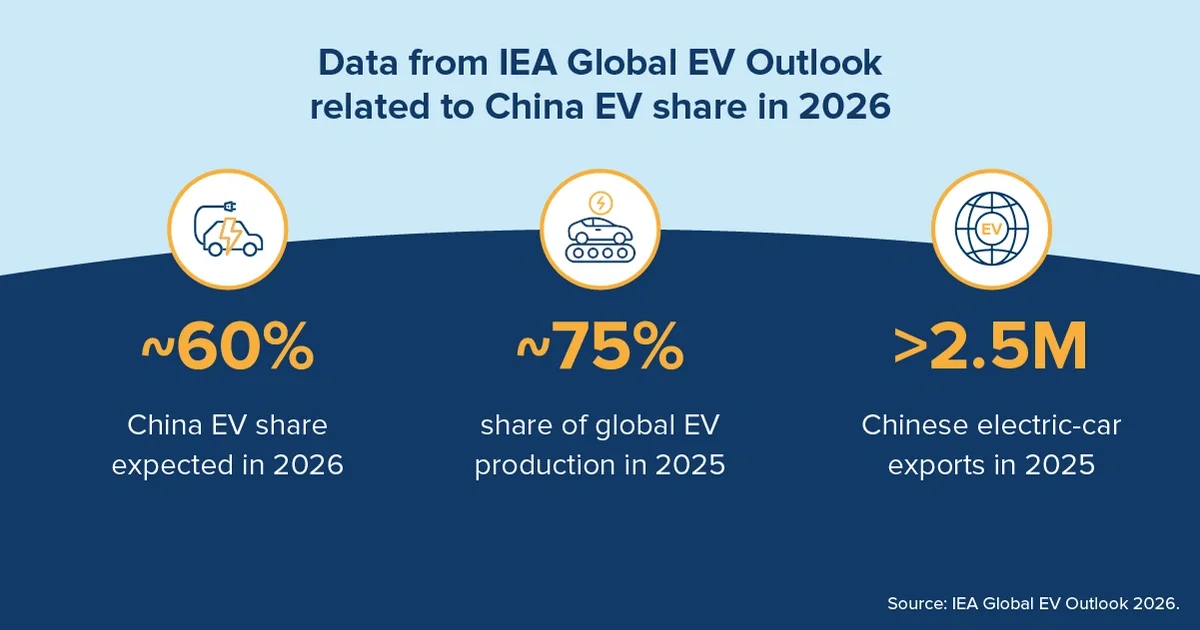
Several developments have important implications for automotive pricing and margin management. Shorter model and price cycles mean companies may need to increase the frequency of market, price, and incentive reviews.
Higher feature content at competitive prices increases the importance of measuring willingness to pay and protecting meaningful differentiation rather than simply matching every competitive move. Growing export pressure makes regional price corridors, rebates, and channel terms increasingly important for preventing unintended margin erosion. Connected and software-rich vehicles create an entirely different commercial challenge: managing subscriptions, usage rights, bundles, and royalties throughout the customer lifecycle.
Five priorities for a more profitable automotive margin strategy
Although North America, Europe, and China present different market challenges, the shifts ultimately converge in the revenue-management layer. The competitive advantage isn’t simply offering more programs. It is knowing which programs create incremental value and executing them consistently.
Five priorities can help automotive companies move toward that goal:
- Target incentives precisely: Differentiate offers by vehicle, powertrain, customer, geography, inventory condition, dealer, and objective – then measure incremental results.
- Connect price to total margin: Evaluate list price, options, freight, tariffs, incentives, dealer support, finance effects, and expected lifecycle revenue together.
- Create channel transparency: Bring dealer, distributor, retail, fleet, and direct-channel data into a governed process for eligibility, claims, and performance analysis.
- Operationalize recurring revenue: Treat software features, connected services, subscriptions, and intellectual property rights as governed commercial offers with traceable entitlements and economics.
- Close the loop: Connect planning, execution, accruals, settlement, and analytics so commercial teams can change programs while they still have time to influence results.
How can automotive companies put margin optimization strategy into action?
Knowing what needs to change is only part of the challenge. Automotive leaders also need a practical path to move from fragmented commercial processes to integrated revenue management. Five actions provide a starting point:
- Build a common net-margin view: Identify every pricing, incentive, rebate, claim, royalty, and channel-data element that changes realized economics.
- Prioritize high-value leakage points: Focus first on programs with large spend, manual adjudication, delayed settlement, weak eligibility controls, or limited performance visibility.
- Standardize rules without eliminating local flexibility: Use common governance and data while allowing valid differences by brand, market, channel, and powertrain.
- Improve data at the decision point: Connect ERP transactions with dealer, retail, inventory, contract, and market data where it changes eligibility or optimization.
- Create a measurable value case: Baseline current spend, effort, cycle time, invalid claims, and margin leakage before selecting technology or scope.
How Vistex supports automotive revenue management
Automotive pricing increasingly requires companies to understand the financial impact of decisions across multiple commercial processes rather than looking at price in isolation.
Vistex AI-driven enterprise software can operate within SAP environments or support cloud deployment across other ERP landscapes, while supporting automotive manufacturers and suppliers across pricing, dealer incentives, rebates, promotions, claims, co-op and MDF, channel inventory, subscriptions, and rights and royalty management.
Turn automotive market disruption into a measurable margin agenda
The automotive market will continue to change. The more important question is how quickly commercial organizations can recognize those changes and respond. A focused assessment of automotive revenue management can help identify where to begin.
The process can include:
- Current-state review: Map priority pricing, incentive, channel, and settlement processes.
- Value baseline: Estimate administrative effort, cycle time, leakage, overpayment, and visibility gaps.
- Future-state scenario: Demonstrate an end-to-end process using the company’s most relevant use case.
- Phased roadmap: Define a practical starting scope, including integration, data, and adoption requirements.
In a market where the powertrain mix, affordability, incentives, tariffs, channels, and recurring revenue models are changing simultaneously, profitable growth will increasingly depend on the ability to see and manage the connections among them. The future of automotive pricing is not simply about setting a better price. It is about creating an integrated revenue management discipline capable of understanding what ultimately changes realized revenue and margin.
Explore more related resources
Get the latest news, updates, and exclusive insights from Vistex delivered straight to your inbox. Don’t miss out—opt in now and be the first to know!